Tuesday, August 16, 2011

Icy News: Windows 8 prerelease launching in coming months


"Windows 8 is set to hit the prerelease stage over the coming months, according to a blog posted yesterday by Microsoft President Steven Sinofsky.

Though the term prerelease version is a bit vague, Sinofsky is likely referring to the beta of Windows 8 since he said that the company wants to "begin an open dialogue with those of you who will be trying out the prerelease version over the coming months."
Aiming the new blog series, "Building Windows 8," at customers, developers, and users in general, Sinofsky used the post to provide tidbits of information but not much detail yet as he acknowledged that "people express frustration over how little we've communicated so far about Windows 8."
Among other comments, Sinofsky said that "Windows 8 reimagines Windows," however he stressed that the company is committed to supporting Windows 8 on all existing Windows 7 PCs and hardware.
Though the initial blog, "Welcome to Building Windows 8," was short on specifics, Sinofsky promised to reveal more over the next few weeks.
"There is so much packed into Windows 8 and there are so many unique and important lenses through which to view Windows 8, and so we want to be sure to take the time to cover as many of these topics as possible, to build up a shared understanding of why we've taken Windows where we have," he wrote. "So in the next weeks we will just start talking specifics of features, since there is no obvious place to start given the varying perspectives. From fundamentals, to user interface, to hardware support, and more, if something is important to you, we promise we'll get to it in some form or another."
The B8 blog, as Sinofsky referred to it, will be updated on a regular basis as different people from Microsoft share the latest information on the development of the new OS.
"As a team we're all going to participate--many of us will author posts, and all of us will read and take note of your comments on this blog," Sinofsky wrote. "We'll participate in a constructive dialogue with you. We'll also make mistakes and admit it when we do. It is almost certain that something will hit a nerve, with the team or with the community, or both, in the blog posts or in the product, or both."
The new blog series comes at a time when rumors have been flying the past several months over when Windows 8 might debut." - via news.cnet.com


Windows 8 is starting to be a very hot topic in the computer world with the release coming soon. With the new OS coming out what kind of changes would you like to see? Let us know what you think about the OS and if you will be getting the Beta version. 

Monday, August 15, 2011

Icy News: 512GB Samsung SSD


"6Gb SATA, 20nm MLC, in volume production
Samsung Electronics Co., Ltd, announced today volume production of SSDs that support the Serial ATA Revision 3.0 interface with data transmissions at 6Gb/s. The new PM830 SSDs* are available at up to 512GB densities.

Samsung's new high-speed SSDs are suited for use in high-performance OEM notebooks and tablets. Sample production of the SATA 6Gb/s 512GB SSDs began in May, with volume production initiated earlier this month. The new drives are expected to replace SATA 3Gb/s-based SSDs by year-end.

"Samsung's new line up of advanced SSDs will raise the performance bar to the next level for ultra-slim notebooks and tablets and accelerate growth of the market for high-performance SSDs," said Wanhoon Hong, executive vice president, memory sales & marketing, Device Solutions, Samsung Electronics. "The industry is expected to quickly embrace SATA 6Gb/s-based SSDs, which also will help increase market interest in 256GB and higher densities significantly," he added.

The SATA 6Gb/s SSD shortens system boot-up time to about 10 seconds, while its high-performance allows users to download up to five DVD video files in less than a minute.

The 512GB SSD utilizes Samsung's  20nm class 32Gb MLC NAND memory chip incorporating the toggle DDR interface. A proprietary NAND controller facilitates performance levels that take advantage of the toggle DDR architecture and the SATA 6Gb/s interface. The new SSD doubles the performance of a SATA 3Gb/s drive, with sequential read speeds of 500 MB/s and sequential write speeds of 350MB/s.

The drive also features AES 256-bit encryption algorithm to protect personal or corporate data from unauthorized access.

Samsung's SATA 6Gb/s SSDs are available in 512GB, 256GB and 128GB densities. The new SSD line-up is targeted for use in premium OEM notebooks, and tablets.

According to market research firm IDC, the global outlook for client-side SSDs is expected to grow ten-fold from 11 million units in 2011 to 100 million units in 2015. Moreover, the use of NAND in 256GB SSDs is forecast to more than double from 19 percent of all NAND used in SSDs in 2011 to 42 percent in 2015. Further, demand for 512GB SSDs is expected to grow from a 0.3 percent portion in 2011 to eight percent in 2015, also underscoring the growing interest in higher density SSDs." - via storagenewsletter.com

SSDs are now becoming the standard for data storage. Samsung is now making it a standard in the notebook and tablet market. Do you think that other companies will follow Samsung with their new target customer? Let us know what you think. 

Friday, August 12, 2011

ICY TIP: Keep your cheap low capacity solid state drive alive with ICY DOCK Xpander Hybrid SSD Adapter


The performance gain of an SSD over a hard disk drive comes with an increased price and a decreased capacity. This can cause a problem for users that are on a budget who want a low cost or cheap way to upgrade their system. SSDs offer speed and performance far greater than any HDD, but the prices of SSDs are still very expensive especially higher capacity SSDs. When purchasing a higher capacity SSD for the first time or upgrading your current SSD you will pay big bucks. For example, a 128GB SSD would probably cost you about $200-$300 and a 256GB SSD nearly $500. Another down side of buying an expensive high capacity SSDs is after 6-12 months; you may find that the same capacity SSD are selling for less than 50% of the original price that you paid for. And if you already had a SSD, you’ll find that the SSD capacity has never been enough. Buying or upgrading a higher capacity SSD has never been cost efficient…until we developed the Xpander “Hybrid” SSD adapter.

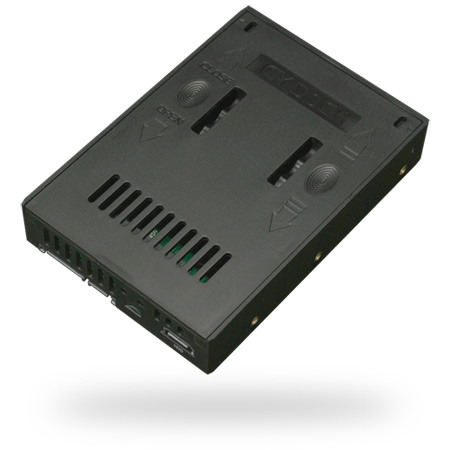
The MB882HX-1SB SSD Xpander is the perfect solution for anyone who can’t afford an expensive SSD or someone already have an SSD that wants to expand their capacity without purchasing an expensive new SSD. The Xpander allows for a cheap, low cost upgrade with the performance boost that rivals the higher end SSDs. The Xpander combines the SSD with regular 3.5” SATA hard drive and automatically creates a “Hybrid” partition and a “Storage” partition. The hybrid partition capacity doubles the SSD capacity that has been used while maintaining similar transfer speed of the SSD. The unused capacity of the 3.5” hard drive goes to the storage partition. Install the OS, intensive software and games to the hybrid partition for highest performance, and other software, games, music and videos to the storage partition.

How it works:
 

The MB882HX-1SB doubles the SSD capacity while maintaining or increasing the transfer rate of the SSD by taking a spare 3.5" hard disk drive, creating a partition that is of equal size to the SSD, and then coupling the partition and the SSD into a “Hybrid partition” (RAID 0 configuration). The additional space that is left on the 3.5” hard drive after matching the SSD capacity is partitioned as “Storage partition” and can be used for extra storage. RAID 0, otherwise known as data striping, accesses and writes to the two drives in parallel, increasing the combined performance of the two drives because only half of the total amount of data is being written to each drive. The performance gain of a RAID 0 configuration with a solid state disk and hard disk drive can match the performance of the solid state disk alone, and in some cases, depending on the speed of the hard disk drive used, can approach speeds near the performance of the new generation solid state disks. The Xpander can even exceed the SSD in both Widows Boot and Shutdown. The result from real world testing can be found here:
Keep your cheap low capacity solid state drive alive with ICY DOCK Xpander Hybrid SSD Adapter
Read the full review: Dreamwarecomputers.com

The MB882HX-1SB SSD Xpander is a perfect solution for solving your low capacity SSD troubles. We all want the speed and performance of a SSD but may not want to spend a lot on expensive high capacity SSDs. The Xpander is perfect weather you are upgrading your current SSD or purchasing a SSD for the first time; the Xpander will save you money. Paired with any 3.5” SATA drive you can have a hybrid solution that will save money but still keep the performance of your SSD as well as the capacity of your 3.5” SATA hard drive. You can save money now while SSDs are still pricey and upgrade later to a higher capacity and faster SSD when the price per gigabyte comes down.
MB882HX-1SB 2.5” SATA SSD Xpander Hybrid Adapter
http://www.icydock.com/goods.php?id=135

Icy News: SandForce First To Pair 24nm Toshiba NAND With Own Controllers

"At Flash Media Summit 2011, SandForce was the first to show off 24nm Toshiba MLC NAND working with their existing SATA 6.0Gb/s SF-2000 processor. As flash manufacturers continue to shrink existing NAND sizes, having compatibility means more options and ultimately lower prices for buyers.


Toshiba NAND is cropping up in quite a few SandForce SSDs lately, especially high performance models like the new OWC Mercury Extreme Pro 6G, OCZ Vertex 3 Max IOPS, and the Patriot Wildfire... all of which use their very fast 3xnm toggle NAND. Needless to say, expect to see more flash options in upcoming SandForce-powered drives, besides the current toggle, synchronous, and asynchronous options already the market." - via Storage Review
Toshiba going with the sandforce controller is interesting, will you be looking into this product by them? What's your reason for switching to a SSD? Let us know!

Thursday, August 11, 2011

Icy News: Hitachi GST Opts for MLC for New Enterprise 6Gb SAS SSDs

"Until recently, conventional wisdom stated that SLC-based SSDs were the only drives suitable for demanding Tier 0 enterprise applications. That has changed with the introduction of Hitachi Global Storage Technologies' (Hitachi GST) newUltrastar SSD400M MLC SSD family. 


As a cost-effective alternative to SLC SSDs, Hitachi GST's enterprise MLC SSDs utilizes Intel's 25nm, highest endurance enterprise-grade, MLC NAND Flash and delivering performance. The result is an enterprise-class MLC SSD that meets the performance, capacity, endurance and reliability demands of today's enterprise and cloud data centers. Targeting enterprise capacity sweet spots, the Ultrastar SSD400M family is available in a 2.5-inch form factor with a 6Gb SAS interface in capacities of 200GB and 400GB.


Not all enterprise MLCs SSDs are created equal. Benefiting from 25nm enterprise-grade MLC NAND Flash combined with endurance-optimized controller technology, the Ultrastar SSD400M 400GB delivers write endurance with 7.3PB lifetime random writes, or 10 full drive writes per day for five years, which satisfies the endurance requirements of most enterprise applications. Hitachi's MLC SSDs also include all of the enterprise features found in the company's Ultrastar SLC SSD family, including end-to-end data protection, error correction and error handling, resulting in the high level of reliability that is critical in enterprise systems." - via Storage Newsletter

Given the change in what cell memory Hitachi is using, this is a surprising step. given the nature of MLC vs SLC wear long term. Since it is known that MLC are less costly, perhaps this is the reason for the change. Now, the important part will be how the controller will handle the read and write without the issues that were seen early with MLC SSDs. Let us know what you think about this!

Icy News: Addonics 5-Port Multiplier Connects via eSATA, USB 3.0


"Addonics Technologies has introduced its HPM-XU hardware port multiplier which can connect up to five SATA devices including hard drives to eSATA or USB 3.0. The device features hardware RAID support including RAID 5. The RAID configuration can be set using dip switches or the included software utility.
The device works in such a way that when five hard drives are connected, they appear as five separate drives. 
Operating system support includes all current versions of Windows and Mac OS X 10.4.x plus Linux kernel 2.4. The HPM-XU is available standalone for $99 or as part of the company's RAID Tower Mini for $245. The RAID Tower Mini features a compact design, two fans, a 180W power supply, and supports up to four hard drives." - via Storage Review
Given this new hardware with both eSATA and USB 3.0, Addonics makes a great refresh to USB 3.0 while keeping eSATA with RAID support. Would you upgrade your current system to add this piece of hardware or wait? Let us know what your thoughts are!

Wednesday, August 10, 2011

Icy News: New Standard for Embedded SSDs


"µSSD specs eliminate connector for integration in embedded devices.
The Serial ATA International Organization (SATA-IO), the consortium dedicated to sustaining the quality, integrity and dissemination of SATA technology, announced a new standard for embedded SSDs.

The SATA µSSD specification eliminates the module connector from the traditional SATA Interface, enabling developers to produce a single-chip SATA implementation for embedded storage applications.

The µSSD standard offers a high-performance, low-cost, embedded storage solution for mobile computing platforms like ultra-thin laptops. The specification defines a new electrical pin-out that allows SATA to be delivered using a single ball grid array (BGA) package. The BGA package sits directly on the motherboard, supporting the SATA interface without a connecting module. By eliminating the connector the µSSD standard enables the physically smallest SATA implementation to date, making it a solution for embedding storage in small form factor devices.

"As tablets and other small computing devices continue to proliferate in the market, the need for scalable small form factor storage solutions rises exponentially," said Mladen Luksic, SATA-IO president. "µSSD provides a new way to leverage the speed, reliability, and low power requirements of SATA technology in these types of products to enable powerful new computing platforms."

SATA-IO is also developing interoperability tests for µSSD products that will help ensure devices based on the µSSD standard will be compatible with other µSSD-based products. Products based on the µSSD specification are already available from SanDisk Corporation. Samsung and Toshiba have also expressed support for the standard.

The µSSD specification was developed as part of SATA-IO's continued mission to provide low-cost, high performance storage solutions optimized for a variety of device segments. Since its introduction in 2001, SATA technology has evolved to enable storage options for a number of applications beyond traditional hard disk PC storage. SATA is now implemented in applications including solid state and optical drives, embedded mobile devices, consumer electronics products and enterprise storage.

SATA specifications are available for members to download at no cost. Non-members may purchase the specification for a nominal fee.

Industry Support for µSSD
Flash industry leaders are supportive of the µSSD initiative. SanDisk currently utilizes the new specification in its iSSD integrated storage device, the world's smallest, fastest 128GB (SATA 6 G/bs) SSD, and other companies are making plans to follow suit.

"The SATA µSSD standard is a significant industry achievement that brings high-performance SSD storage in a BGA form factor," said Kevin Conley, senior vice president, client storage solutions, SanDisk. "This is enabling OEM designs of new super-thin Ultrabooks and tablets with high SATA performance."

"The µSSD specification will enable embedded storage applications to give designers greater design flexibility," said Scott Nelson, VP Memory Toshiba America Electronic Components, Inc. "Toshiba is pleased to support the development of this specification, which will help enable the continued evolution of thinner and smaller personal computing devices."" via - storagenewsletter.com

It seems like everyday they are making advances in SSD technology and today being no different. With this advance in embedded SSDs do you think that we will start seeing more of this technology? Let us know what you think and what products will see the real benefits of this technology. 

Tuesday, August 09, 2011

MB982SPR-2S review - posted by hitechlegion.com


ther than “My computer is too slow” one of the most common complaints I hear is “I need more storage”, which is usually followed by “Maybe I should get an SSD”. My answer to these questions are “what do you want storage or speed?” The average consumer does not realize that if you’re on a budget the cost to get both storage and speed out of an SSD is probably more than they are willing to spend......read the full review

Icy News: Can Seagate's Thin Hard Drive Stave Off Threat of SSDs?


"This is a Press Release edited by StorageNewsletter.com on Tue, August 9th, 2011
A report from IHS iSuppli
Seagate Technology LLC's introduction of a super-slim HDD could help the HDD industry stave off the incursion of SSDs in the notebook PCs and media tablet markets, according to data from the IHS iSuppli Memory and Storage Service from information and analysis provider IHS.

"Although shipments of SSDs for notebooks will be miniscule compared to HDDs during the next few years, the solid state drives are shaving off points of market share that are critical to maintaining the growth of the hard drive business," said Fang Zhang, analyst, storage systems, for IHS. "Furthermore, SSDs are universally employed in media tablets, which are eating into the sales of notebook and netbook PCs. Seagate's new Momentus Thin HDD represents an attempt by the hard drive industry to answer the challenge of SSDs in notebooks-and even in media tablets-by undercutting the cost of solid-state drives while providing higher densities."

SSD shipments in notebooks will rise to 16.8 million units in 2015, up from 4.7 million in 2010, as presented in the figure below. This will represent only a single-digit percentage of the notebook storage market compared to HDDs through the year 2015.However, this small percentage is impacting the growth of the notebook HDD market.

The notebook HDD market set to expand at a 9.7 percent CAGR from 2010 to 2015. The combined market for HDDs and SDDs will rise at a CAGR of 10.2 percent. This indicates the solid-state drives will shave off half a percentage point of growth from the notebook HDD market during the five year period.

The rising sales of media tablets could have an even bigger impact on notebook HDD sales. Media tablets, which employ flash memory for storage, are expected to have a negative impact on sales of notebook PCs, and thus the HDDs used in them.

Seagate's Momentus Thin HDD could find acceptance in netbook and notebook computers, preventing SSDs from making further inroads. However, the near term opportunity for these drives in tablets is limited. HDD-based models are expected to account for 2 percent or less of the total tablet market in 2012, IHS predicts.

A Momentus event for storage
Seagate in June announced its Momentus Thin HDD, a 2.5-inch drive that is only 7 millimeters thick. The Momentus is set to be available in September. The HDD has capacities ranging from 160GB to 320GB, with speeds of 7,200RPM and 5,400RPM, and 16MB of cache.

The thin form factor makes the Momentus suitable for mobile platforms.

However, the Momentus may really set itself apart from SSDs in terms of cost and capacity.

Seagate said the Momentus Thin HDDs are being used in what it called the world's first handheld tablet computers with hard drives: the G9 8- and 10-inch tablets from Archos. The manufacturers' suggested retail prices for the Archos 80 G9 and Archos 101 GB tablets are $279 and $349. Seagate said that was a significantly lower price than competitive flash-based tablets, which cost between $349 to $829, with densities from 16GB to 64GB.

A tablet using the Momentus Thin HDD can have 10 times the storage capacity of a flash-based tablet. Momentus Thin HDD-based tablets also can be significantly lighter than HDD-based netbooks due to the reduction of the 2.5-inch drive size.

HDD disadvantages
The disadvantages of HDD-based tablets include a potentially shorter battery life, a longer boost time and a relatively heavy weight compared to flash-based tablets. These drawbacks may serve as a disincentive to some tablet users who require speed and mobility." - via storagenewsletter.com

Momentus drives have been very popular in the past due to the price per gigabyte and the performance of the drives. Still, the SSD out does the performance of these drives. Do you think that the thinner Momentus drives will boost their sales and surpass the SSD? Or will they still be the second choice in drives under the SSD? Let us know what your thoughts are.

Monday, August 08, 2011

ICY DOCK Summer 2011 Sponsored Contests


ICY DOCK has made this summer that much better by teaming up to have two amazing contests with some of our newest and hot selling products!
First up is the Icy Dock/Storage Review contest to find the user with the slowest and fastest hard drives! Each category will have prizes of a MB881U3-1SA & MB981U3-1SA and MB982SP-1S & MB882SP-1S-1B, with two winners for both competitions, respectively. Check out below for more information! This contest ends on August 12th, so hurry!

ICYDOCK/STORAGEREVIEW
Second up is the Icy Dock/Hitechlegion contest that will go on until August 31st! They will be giving away one item per week, with different requirements and prize, so be sure to always check back for the best chance to win!

ICYDOCK/HITECHLEGION
Have fun with each contest!